
Uniden DECT 6.0 Owners Manual: A Comprehensive Guide
This guide comprehensively details the Uniden DECT 6.0 system, offering setup, operation, and troubleshooting assistance. PDF manuals are readily available online for various models.
Explore features like call management, voicemail, and expansion options, ensuring optimal performance from your interference-free digital cordless phone system.
Understand FCC compliance, hearing aid compatibility, and warranty details for a complete user experience with your Uniden DECT 6.0 device.
Welcome to the world of clear, reliable communication with your Uniden DECT 6.0 Digital Answering System! This system, encompassing models like the DECT1580-2 and variations such as 2101/2101-2/2101-3/2101-4, represents a significant advancement in cordless phone technology. DECT 6.0 stands for Digital Enhanced Cordless Telecommunications, and it’s designed to deliver superior voice quality and security compared to older 2.4 GHz and 5.8 GHz systems.

This system offers an interference-free experience, minimizing dropped calls and static. The Uniden DECT 6.0 is also expandable, allowing you to add handsets to accommodate multiple users within your home or office. The accompanying owner’s manual, conveniently available as a PDF download, is your key to unlocking the full potential of your phone. It provides detailed instructions on everything from initial setup and operation to advanced features and troubleshooting.
Understanding your specific model number (found on the back of the base unit, often indicated as DECT1580-2 alongside IC:513C-UC518 REN0.0) is crucial for accessing the correct documentation and support resources. This introduction sets the stage for a comprehensive exploration of your Uniden DECT 6.0 system.
Understanding DECT 6.0 Technology
DECT 6.0, or Digital Enhanced Cordless Telecommunications 6.0, represents a leap forward in cordless phone technology, specifically designed to eliminate interference from other wireless devices. Unlike older systems operating on 2.4 GHz (often congested by Wi-Fi routers and Bluetooth devices), DECT 6.0 utilizes the 1.9 GHz frequency band, providing a clearer and more secure connection.
This technology ensures superior voice quality, reducing static and dropped calls. Furthermore, DECT 6.0 incorporates digital encryption, safeguarding your conversations from eavesdropping. Uniden’s implementation of DECT 6.0 focuses on reliability and expandability, allowing users to seamlessly add handsets to their system.
The inherent security features and reduced interference make DECT 6.0 an ideal choice for home and business use. The technology’s robust design contributes to a more consistent and dependable calling experience. Refer to your owner’s manual PDF for detailed information regarding specific features and benefits related to the DECT 6.0 standard within your Uniden model.
Model Numbers and Identification (DECT1580-2 & Others)
Identifying your specific Uniden DECT 6.0 model is crucial for accessing the correct owner’s manual and support resources. Common model numbers include DECT1580-2, alongside variations like 2101, 2101-2, 2101-3, and 2101-4. The model number is typically located on a sticker affixed to the base unit’s underside.
Additionally, you may find an IC:513C-UC518 and REN0.0 identifier on this same sticker, denoting Industry Canada compliance and a Ringer Equivalence Number. These numbers are important for regulatory purposes. The packaging for your Uniden DECT 6.0 system will also display the model number prominently.
Confirming the exact model ensures you download the appropriate PDF manual containing instructions tailored to your phone’s features. Variations between models may exist in terms of handset capacity, answering system capabilities, and advanced settings. Accurate identification streamlines troubleshooting and maximizes your user experience.
Locating the Official Owners Manual (PDF Download)
Accessing the official Uniden DECT 6.0 owner’s manual in PDF format is straightforward. A direct link to the manual is often available through online searches, specifically targeting your model number (e.g., DECT1580-2, 2101). The Uniden website itself is a primary source for downloadable manuals, categorized by product type.
Alternatively, numerous third-party websites archive user manuals, offering convenient access. Ensure the PDF you download is from a reputable source to guarantee accuracy and completeness. These manuals typically cover installation, operation, troubleshooting, and technical specifications.
Downloading the PDF allows you to easily search for specific features or solutions to common issues. Having a digital copy readily available eliminates the need for a physical manual and ensures you always have the latest information at your fingertips.

Setting Up Your Uniden DECT 6.0 Phone
Begin by unpacking all components, connecting the base unit’s power adapter, and installing/charging handsets. Follow the initial setup guide for date/time configuration.
Unboxing and Component Checklist
Carefully unpack your Uniden DECT 6.0 system and verify all components are present. The standard package typically includes the base unit, one or more handsets (depending on the model – 2101, 2101-2, 2101-3, or 2101-4), a power adapter for the base unit, and handset chargers.
Ensure you also locate the battery packs for the handsets, often requiring installation before initial charging. A phone cord may be included for certain features, though DECT 6.0 primarily operates wirelessly. Inspect all items for any shipping damage; if anything is missing or damaged, immediately contact Uniden’s Customer Care line for assistance.
Refer to the quick start guide included in the box for a visual checklist of all included parts. Confirming the presence of each component now will streamline the setup process and prevent potential issues later. Retain the original packaging for potential warranty claims or returns.
Connecting the Base Unit and Power Adapter
Begin by selecting a central, stable location for the base unit, away from metal objects and sources of interference. Connect the provided power adapter to the base unit’s DC power jack, ensuring a secure fit. Then, plug the adapter into a working electrical outlet.
Avoid using extension cords or power strips if possible, as they can sometimes introduce interference. If a phone line connection is required for certain features (like fax or DSL), connect a standard phone cord to the base unit’s line jack and then to the wall jack.
Verify the power indicator light on the base unit illuminates, signifying it’s receiving power. Allow a few minutes for the base unit to initialize before proceeding with handset setup. Proper power connection is crucial for optimal system performance and functionality.
Installing and Charging Handsets
Initially, insert the battery pack into each handset, ensuring correct polarity as indicated inside the battery compartment. Then, place the handset into the base unit’s charging cradle or a compatible charging station. Confirm a secure connection; the handset should sit firmly in the cradle.
Allow the handsets to charge continuously for at least 16-24 hours before initial use. This ensures optimal battery performance and longevity. During charging, a charging indicator light on the handset will typically illuminate, often changing color or turning off when fully charged.
Once fully charged, remove the handsets from the cradle. They are now ready for registration with the base unit and subsequent use. Regular charging maintains optimal performance and prevents unexpected power loss during calls.
Initial Setup and Date/Time Configuration
Upon powering on the base unit, the system will likely prompt you to configure the date and time. Access the setup menu using the handset’s navigation keys, typically by pressing the “Menu” or “Settings” button. Navigate to the “Date/Time” settings option.
Use the keypad or arrow keys to accurately set the current date, month, and year. Subsequently, configure the time, including hours and minutes, ensuring AM/PM is correctly selected. Confirm your entries by pressing “OK” or “Save”.
Correct date and time settings are crucial for accurate caller ID display, voicemail timestamps, and proper system operation. Some models may offer automatic time synchronization via a network connection, if available. Verify the settings after initial setup.

Using Your Uniden DECT 6.0 Phone
Master call handling, voicemail access, and caller ID features with ease. Enjoy clear communication and convenient functionality from your Uniden DECT 6.0 system.
Making and Receiving Calls
To initiate a call, simply enter the desired number using the keypad on your Uniden DECT 6.0 handset and press the ‘Talk’ or ‘Send’ button. The display will show the dialing progress, and the call will connect once answered. For receiving calls, the phone will ring, and you can press the ‘Talk’ or ‘Send’ button to answer.
During a call, you can utilize features like speakerphone by pressing the designated ‘Speaker’ button. Adjust the volume using the volume control keys. To end a call, press the ‘End’ or ‘Redial’ button. The Uniden DECT 6.0 system supports call waiting, allowing you to answer an incoming call while already on a call – a prompt will indicate the incoming call, and you can switch between calls as needed. Utilize the redial function by pressing the ‘Redial’ button to quickly call the last number dialed.
Remember to consult your owner’s manual for specific button layouts and feature availability, as they may vary slightly depending on your exact model (e.g., DECT1580-2).
Answering System Features
The Uniden DECT 6.0 answering system offers convenient call management when you’re unavailable. You can record a personalized greeting to play for incoming callers. To access the answering system settings, press the ‘Message’ or ‘Voicemail’ button on the base unit or handset – consult your manual for the specific key.
Customize the number of rings before the system answers, ensuring it doesn’t interrupt your calls. The system can be set to answer all calls, or only calls from your contact list. You can also enable or disable distinct ringing for incoming messages. The total recording time available varies by model, but is generally sufficient for multiple messages.
Remember to regularly check for new messages and delete old ones to maximize recording capacity. Refer to your owner’s manual (DECT1580-2 or similar) for detailed instructions on programming and utilizing these features effectively.
Voicemail Management and Playback
Your Uniden DECT 6.0 system’s voicemail allows callers to leave messages when you cannot answer. Accessing voicemail typically involves pressing the ‘Message’ or ‘Voicemail’ button on the handset. The system will prompt you for a password if one has been set – check your manual for the default or customized settings.
Once in voicemail, you can listen to new messages, delete them, or save important ones. Most models offer options to skip to the next message, rewind, or fast-forward within a message. You can also often call your voicemail remotely from another phone, using a designated access number and password.
Refer to your specific model’s manual (like the DECT1580-2) for detailed instructions on voicemail navigation and features. Proper management ensures you don’t miss crucial information and efficiently utilize the voicemail storage capacity.
Caller ID and Call History
The Uniden DECT 6.0 phone system, when properly connected to a phone line with Caller ID service, displays the caller’s name and/or number before you answer. This feature requires a subscription to Caller ID from your telephone service provider. Ensure your service is active for optimal functionality.
Beyond displaying incoming caller information, your phone also maintains a call history log. This log stores a record of recent calls – both incoming, outgoing, and missed – allowing you to easily redial numbers or review call patterns. The capacity of the call history log varies by model.
Access the call history through the phone’s menu, typically using the ‘Call History’ or ‘Log’ button. Consult your specific model’s manual (e.g., DECT1580-2) for precise navigation instructions and options for managing the call log.

Advanced Features and Settings
Explore system expansion options, accessibility features, and troubleshooting tips to customize your Uniden DECT 6.0 experience. Optimize performance and usability.
Expanding the System (Adding Handsets)
The Uniden DECT 6.0 system offers the convenience of expanding your phone network by adding additional handsets. This allows for greater coverage and accessibility throughout your home or office. Before purchasing additional handsets, verify compatibility with your base unit model – specifically, the DECT1580 series supports multiple handsets (2101/2101-2/2101-3/2101-4 models).
To add a handset, typically you’ll need to enter registration mode on the base unit. This usually involves pressing and holding a specific button combination (refer to your owner’s manual for precise instructions). Then, place the new handset on the base unit or near it, initiating the pairing process. The system will guide you through the registration, often displaying a confirmation message on both the base and the handset screens.

Ensure each handset is adequately charged after registration. The maximum number of supported handsets varies by model, so consult your manual to avoid exceeding the limit. Properly registered handsets will function seamlessly with all the features of your Uniden DECT 6.0 system.
Accessibility Features
Uniden DECT 6.0 phones incorporate several accessibility features designed to enhance usability for individuals with diverse needs. These features aim to make communication easier and more convenient for everyone. Many models offer adjustable volume control, allowing users to customize the audio level to their preference. Additionally, some handsets include a ringer volume boost for those with hearing impairments.

Hearing aid compatibility (HAC) is a key consideration, and Uniden DECT 6.0 phones are often rated for HAC, ensuring clear audio transmission when used with compatible hearing aids. The user manual details the specific HAC rating for your model. Visual alerts, such as flashing ringers, provide an alternative notification method for individuals with auditory challenges.
Furthermore, large, easy-to-read displays and backlit keypads improve visibility and ease of use. Explore your phone’s menu settings to discover and activate these accessibility options, tailoring the device to your specific requirements.
Interference and Troubleshooting
DECT 6.0 technology minimizes interference, but occasional issues can arise. Static, dropped calls, or poor audio quality might indicate interference from other electronic devices. Try relocating the base unit away from potential sources like microwaves, wireless routers, or other cordless phones. Ensure the base unit has a clear line of sight to the handsets.
If experiencing no dial tone, verify the base unit is properly connected to a working phone jack and has power. For voicemail issues, confirm your message storage is not full and that the system is correctly configured. If the handset isn’t charging, check the battery contacts and ensure the charger is functioning.
Refer to the owner’s manual for specific troubleshooting steps related to your model. Resetting the handset or base unit can often resolve minor glitches. If problems persist, contact Uniden customer support for assistance.

Technical Specifications and Compliance
Uniden DECT 6.0 phones adhere to FCC standards (IC:513C-UC518, REN0.0) and offer hearing aid compatibility (HAC). Detailed specifications are within the manual.
FCC and Industry Canada Compliance (IC:513C-UC518 REN0.0)
This Uniden DECT 6.0 phone complies with Part 15 of the FCC rules. Operation is subject to the following two conditions: (1) This device may not cause harmful interference, and (2) this device must accept any interference received, including interference that may cause undesired operation.
Changes or modifications not expressly approved by Uniden could void the user’s authority to operate the equipment. This equipment has been tested and found to comply with the limits for a Class B digital device, pursuant to Part 15 of the FCC Rules. These limits are designed to provide reasonable protection against harmful interference in a residential installation.
Industry Canada compliance is indicated by IC:513C-UC518. The Ringer Equivalence Number (REN) is 0.0, which is a measure of the device’s noise generation. A lower REN indicates less noise. Refer to the full manual for detailed information regarding FCC and Industry Canada regulations.
Hearing Aid Compatibility (HAC)
The Uniden DECT 6.0 phone has been rated for hearing aid compatibility; This rating indicates the level of interference the phone may cause with hearing aids. The phone’s HAC rating is crucial for users with hearing impairments to ensure clear communication.
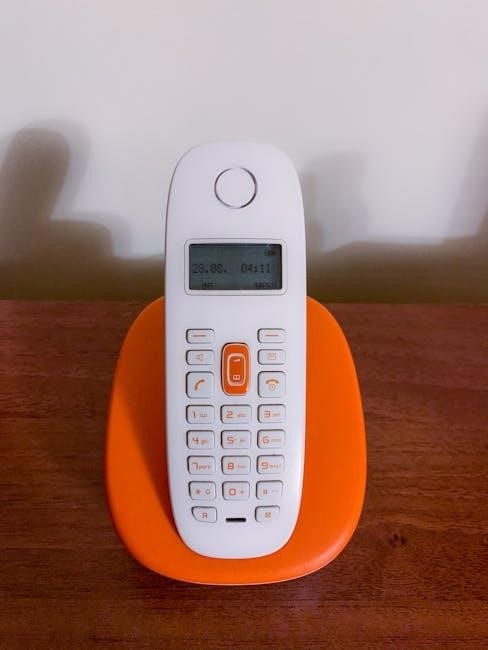
Different hearing aids exhibit varying degrees of immunity to radio frequency interference. Therefore, the HAC rating is a general guideline, and actual performance may vary depending on the specific hearing aid model. It’s recommended to test the phone with your hearing aid to determine compatibility.
The manual provides detailed information about the HAC rating for this specific Uniden DECT 6.0 model. Users should consult this information and their hearing aid manufacturer for optimal settings and usage. Proper testing and configuration can significantly improve call clarity.
Warranty Information and Customer Support
Uniden provides a warranty for its DECT 6.0 phone systems, covering defects in materials and workmanship under normal use. The warranty period typically begins from the date of original purchase, and proof of purchase is required for any claims. Specific warranty details, including duration and coverage limitations, are outlined in the official owner’s manual.
For customer support, Uniden offers various channels, including a dedicated customer care line and online resources. The website provides access to FAQs, troubleshooting guides, and downloadable manuals. Contacting customer support is recommended for issues not addressed in the manual or for warranty claims.

Uniden’s support team can assist with setup, operation, and technical difficulties. Keep your model number (e.g., DECT1580-2) handy when contacting support for efficient assistance. Refer to the manual for contact information and support hours.